



Why Rebind Runs on Stablecoins
An introduction to stablecoins, how Rebind uses them, and why they are widely trusted.
 By Steven Figura··3 min read
What stablecoins are in simple terms
A stablecoin is a digital token that always represents a real euro or dollar. It is backed one-to-one by cash or high-quality liquid assets held by the issuer. Because the reserves match the supply, the value stays stable and predictable.
You can think of a stablecoin as a digital cashier's check.
For every token in circulation, there is real money held by a regulated financial institution.
Rebind uses only fully asset-backed stablecoins with long operating histories and deep liquidity:
| Stablecoin | Issuer | Note |
|---|---|---|
| EURe | Monerium | An EMI-licensed institution in Europe |
| EURC | Circle | A publicly listed and highly regulated company |
| USDC | Circle | Independent monthly reserve attestations |
| USDT | Tether | The most widely used stablecoin globally |
These issuers safeguard billions on behalf of businesses, fintech platforms, exchanges and consumers worldwide.
Why the stablecoins Rebind uses are safe
Rebind selects only the stablecoins that meet strict criteria:
- fully backed by cash or short-term government securities
- audited or attested regularly by independent firms
- issued by licensed or regulated financial institutions
- redeemable one-to-one for the underlying currency
- widely used across the global financial ecosystem
Circle's public listing adds an additional layer of oversight and transparency. Monerium operates under European electronic money regulation. Tether publishes detailed reserve information and has been tested through multiple market cycles.
This means the stablecoins Rebind uses behave like traditional money, only on faster and more modern rails.
Where stablecoins are used today
Stablecoins have become core financial infrastructure. They move trillions of dollars each year and often surpass Visa or Mastercard in daily transaction volume.
They are used by Revolut for global transfers, Bitpanda as payment and settlement rails, Klarna to speed up merchant payouts, Stripe and Visa for instant settlement in USD, and global trading venues and institutional pilots.
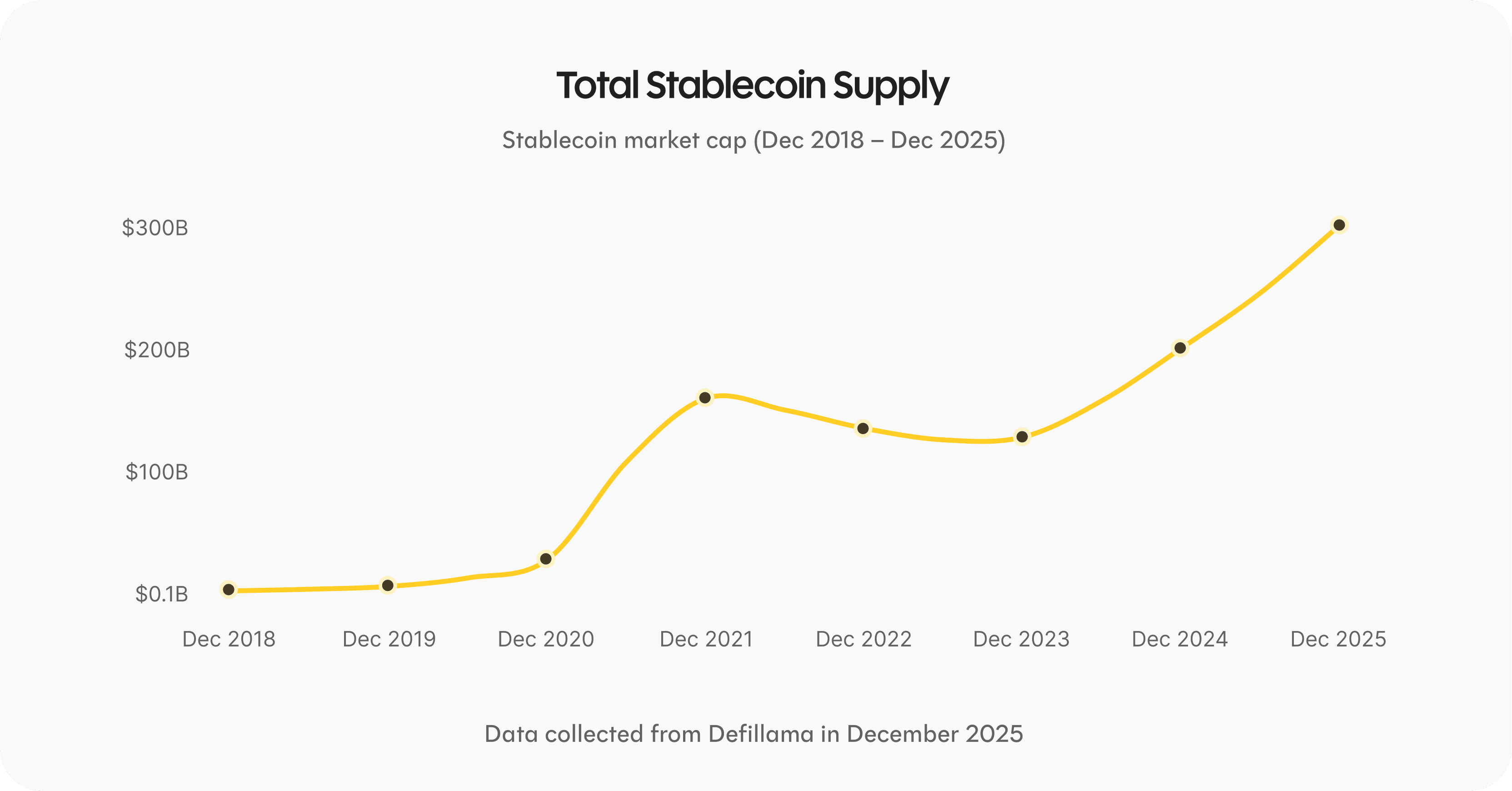
Stablecoins are no longer experimental technology. They are a mature, widely adopted format for digital money.
Why Rebind runs on stablecoins
Stablecoins make modern savings possible by offering three key advantages.
1. Stable value
Stablecoins behave like euros or dollars. They do not fluctuate and do not expose users to currency risk. This gives Rebind a predictable foundation for savings.
2. Fast and reliable movement of money
Stablecoins settle in seconds, function globally and operate every hour of the day. This allows your money to move quickly and removes the delays of traditional banking.
3. Direct access to modern financial infrastructure
Stablecoins are the currency used in the large, established open money markets that Rebind connects to. They enable savings to grow efficiently while remaining accessible at any time.
In short
Stablecoins are digital euros and dollars backed by real reserves and issued by regulated, audited institutions.

